
πŸ“ž Call for a Free Quote: 855-524-1917

Furnace Replacement & Installation in Dallas, TX

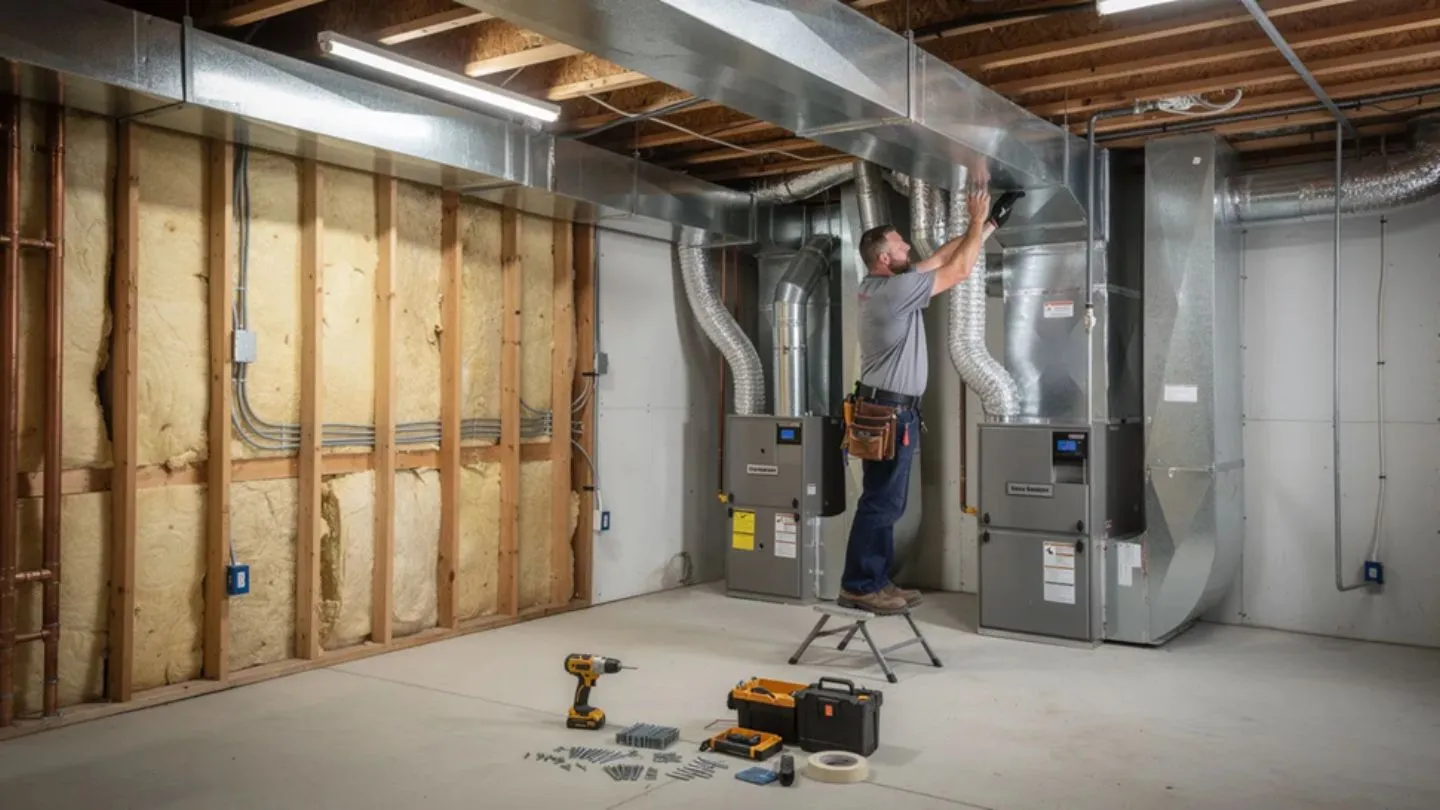
Technician installing new furnaces and connecting ductwork in a Dallas home's basement mechanical room

Dallas homes typically pair a gas furnace with the AC system, sharing the same air handler and ductwork, which is why furnace replacement is frequently bundled with an AC replacement rather than handled as a separate job later. Replacing both at the same time keeps the two systems on the same install date and warranty timeline instead of ending up with a five-year-old furnace paired with a brand-new AC condenser, which complicates future service and rarely saves real money over doing them together.

Our furnace replacement includes matching the furnace's airflow output to the AC system's coil and ductwork, since a mismatched furnace and coil combination causes the same kind of performance shortfall as pairing a new condenser with an old coil. We also inspect the venting, gas line connections, and existing ductwork condition as part of the replacement, flagging any issues that would undercut the new furnace's performance or safety before the job is considered done.

For homes replacing a furnace on its own without an AC swap, we still verify the airflow match against the existing AC coil rather than assuming compatibility.

πŸ“ž Call 855-524-1917

Request This Service

* Indicates required field

Why Furnace and AC Replacement Are Often Bundled

A furnace and AC system share ductwork and, in many setups, the same air handler, so replacing them together keeps both components on a matched airflow rating and the same warranty start date, rather than staggering replacements and risking a mismatch down the line.

AFUE Ratings and What They Actually Mean for a Dallas Home

A furnace's efficiency is measured in AFUE β€” annual fuel utilization efficiency β€” which represents the percentage of gas burned that actually turns into usable heat rather than escaping up the flue. A standard-efficiency furnace runs around 80% AFUE and vents through a metal flue, while a high-efficiency condensing furnace runs 90-98% AFUE and vents through PVC pipe instead, since the exhaust gases are cool enough by the time they exit that metal venting isn't required. Dallas's mild winters mean the gap in real dollar savings between an 80% and a 96% furnace is smaller here than it would be in a colder climate where the furnace runs constantly for months, which is a factor we walk through honestly rather than assuming the highest AFUE number is automatically worth the added cost for every home.

Venting Changes Between Standard and High-Efficiency Furnaces

Switching from a standard-efficiency furnace to a high-efficiency condensing model isn't a drop-in swap on the venting side β€” the old metal B-vent flue gets abandoned or capped, and new PVC intake and exhaust piping has to be routed to an exterior wall, sized and sloped correctly so condensate drains back into the furnace rather than pooling in the pipe. That routing sometimes means a different termination point on the house than the old flue used, and we plan that placement to keep exhaust clear of windows, soffit vents, and neighboring structures per code. Furnaces replaced at the same efficiency tier as the old unit usually reuse the existing venting without this added work.

Single-Stage, Two-Stage, and Modulating Furnaces

A single-stage furnace runs at one fixed output whenever it's on, a two-stage furnace can run at a lower output for milder days and ramp up on the coldest ones, and a modulating furnace adjusts its output across a wider range in smaller increments for the most even temperature control. For Dallas's relatively mild heating season, a single-stage furnace does the job for most homes without issue, and we don't default every quote to a multi-stage unit just because it carries a higher comfort rating β€” the added cost only makes sense where a home's layout or a homeowner's comfort priorities actually benefit from it.

Signs a Furnace Needs Replacement, Not Repair

A cracked heat exchanger is the clearest replacement signal a furnace can give, since it's a safety issue β€” a cracked exchanger can allow combustion gases, including carbon monoxide, to mix with the air being heated and distributed through the house β€” and it's not a component that gets patched. Short-cycling, a burner that won't stay lit, rust or scaling visible around the heat exchanger or burner assembly, and a system that's simply past the 15-to-20-year mark typical for a gas furnace are the other signals we look for during an assessment. We test for cracked heat exchangers and carbon monoxide safety as a standard part of any furnace inspection, not just when a homeowner specifically asks.

What Drives the Cost of a Furnace Replacement

BTU output sized to the home's actual heating load, AFUE tier, and whether the job requires new PVC venting versus reusing existing metal flue venting are the main cost drivers. Gas line condition and connection type matter too β€” a furnace replacement sometimes surfaces gas line work that wasn't visible until the old unit came out, particularly in older homes where the original gas piping wasn't sized for a higher-output replacement furnace. Bundling the furnace with an AC replacement typically costs less in combined labor than doing the two jobs months apart, since the crew is already in the mechanical space and coordinating both connections at once.

Licensing and Gas Line Work

Furnace installation involving gas line connections requires work performed under a licensed HVAC contractor per Texas Department of Licensing and Regulation requirements, and any gas line modification is inspected as part of the City of Dallas mechanical permit process alongside the mechanical equipment itself. We handle the gas connection, venting, and combustion air requirements as licensed, permitted work rather than treating the gas side of a furnace installation as a lesser task than the mechanical equipment itself.

What to Expect During a Furnace Replacement Visit

The crew shuts off gas and power to the old unit first, then disconnects and removes the furnace along with the old venting if it's being replaced with a different efficiency tier. The new furnace gets set, gas line and electrical connections made, and venting run or reconnected depending on whether it's a like-for-like swap or an efficiency upgrade requiring new PVC piping. Once everything is connected, we test for gas leaks at every joint, verify proper combustion and draft, cycle the system through a full heating run, and check airflow and temperature rise against the manufacturer's specification before considering the job complete. A standard like-for-like furnace swap is typically a one-day job; a switch to a different efficiency tier requiring new venting can add a few hours for the additional piping work.

Areas We Serve

Proudly providing ac replacement across the region:

Get Furnace Replacement & Installation in Dallas Today

Fast response, upfront pricing, and friendly local pros. Call now for a free quote.

πŸ“ž Call 855-524-1917