
πŸ“ž Call for a Free Quote: 855-524-1917

Central AC Replacement & Installation in Dallas, TX

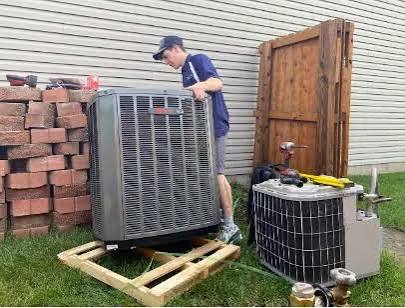
New and old AC condenser units side by side on a pallet during a Dallas central AC replacement

A full central AC replacement means swapping both halves of the system β€” the outdoor condenser and the indoor evaporator coil β€” as a matched set, which matters more than it sounds. Mixing a new high-efficiency condenser with an old, worn coil is a common shortcut that undercuts the efficiency gain you're paying for and can shorten the life of the new equipment. We replace both together as standard practice, not as an upsell.

Before we recommend a system size, we run an actual Manual J load calculation rather than matching the tonnage of whatever was there before. A lot of original Dallas builder-grade systems were sized off a square-footage rule of thumb, which routinely gets it wrong in either direction β€” an oversized system short-cycles and struggles with humidity, while an undersized one runs constantly and never quite catches up during a Dallas summer's worst stretches.

Every system we install meets the current SEER2 minimum efficiency standard, and we pull the required City of Dallas mechanical permit and schedule the inspection as part of the job, even on a straightforward like-for-like replacement β€” that permit and inspection is required under the city's building code regardless of whether the new system is the same size as the old one.

πŸ“ž Call 855-524-1917

Request This Service

* Indicates required field

Matched Condenser and Coil, Not a Mismatched Shortcut

Pairing a new condenser with an old evaporator coil is a common way installers cut cost, but it leaves efficiency and reliability on the table. We replace both components together so the system performs at the rating it's sold at, not a compromised version of it.

The City of Dallas Permit Requirement

Full AC system replacement in Dallas requires a mechanical permit under the city's building code, including like-for-like swaps at the same tonnage. We pull the permit and coordinate the required inspection β€” covering the electrical disconnect, condensate drain, float switch, and unit placement β€” as a standard part of the installation.

What a Central AC Replacement Day Actually Looks Like

The crew starts by recovering the old system's refrigerant with EPA-approved recovery equipment, since venting it to the atmosphere is both illegal and wasteful of usable refrigerant. From there the old condenser and indoor coil come out, the new condenser gets set on a level pad or stand, and the new line set connections are brazed rather than just flared, with a nitrogen purge running through the copper during brazing to keep oxidation scale from forming inside the line β€” scale that can eventually clog the metering device if it's skipped. Once the new coil is set in the air handler cabinet, we pull a vacuum on the whole line set to remove moisture and air before any refrigerant goes in, then weigh in the charge to the manufacturer's spec and confirm it against subcooling and superheat readings rather than just going by pressure alone. The system runs through a full cooling cycle before we call the job done, and we walk through the new thermostat and warranty paperwork with the homeowner before leaving. Most single-family jobs like this wrap in one day.

Why the Electrical and Line Set Sometimes Need Upgrading Too

A new condenser's data plate lists a minimum circuit ampacity and maximum overcurrent protection that's often higher than what an older, lower-efficiency system required, particularly with variable-speed compressors that draw more current during their soft-start sequence. If the existing disconnect, wiring gauge, or breaker doesn't meet the new unit's electrical requirements, that gets upgraded as part of the job rather than installed out of code. The existing line set is another area we inspect rather than assume is fine β€” a line set that's kinked, undersized for the new system's tonnage, or has a slow leak history is a common source of comeback service calls if it's reused without a real inspection first.

Signs Your Central AC Needs Replacement, Not Another Repair

A system needing its second or third repair in the same cooling season is usually past the point where another fix makes financial sense, especially once the compressor itself β€” the most expensive single component β€” is the failing part. A refrigerant leak on a system still running R-22 is a strong replacement signal on its own, since R-22 hasn't been produced or imported into the U.S. since 2020 and recharging a leaking R-22 system is both expensive and temporary. Rising electric bills without a change in how the home is used, a compressor that hums but won't start (often a failing start capacitor or relay masking a bigger underlying issue), and a system that's simply reached the 10-to-15-year mark are all reasons we recommend a real replacement estimate instead of another service call.

What Actually Drives the Cost of a Central AC Replacement

Tonnage and efficiency tier are the two biggest cost factors, but they're rarely the only ones β€” ductwork condition, whether the existing line set can be reused or needs full replacement (especially on an R-22-to-R-410A conversion), electrical panel or breaker upgrades, and attic accessibility all affect the final number. A system tucked into a tight attic with limited access takes longer to remove and install than one with a walk-up platform, and that labor difference shows up in the quote. We itemize what's driving the price rather than handing over a single lump-sum number, and where a system qualifies for an Oncor rebate, that gets applied against the total rather than treated as a separate rebate you have to chase down yourself.

Central AC Replacement vs. Repair: Making the Call

Repair still makes sense for a younger system with a single component failure, especially if the part is still under manufacturer warranty and the rest of the system is in good shape. Replacement becomes the better call once a system is past its typical service life and facing a repair bill that represents a meaningful fraction of what a new system would cost β€” a common rule of thumb multiplies the repair estimate by the system's age in years, and if that number exceeds the cost of a new system, repair usually isn't the better investment. We give a straight recommendation either way rather than defaulting to the more expensive option, including telling homeowners outright when a repair is still the right call.

Warranty Coverage on Your New System

New equipment carries a manufacturer's parts warranty, typically running 10 years on the compressor and other major components when the equipment is registered within the manufacturer's required window after installation β€” a step we handle as part of the job so it doesn't get missed. On top of that, we provide our own written labor warranty covering the installation work itself, separate from the manufacturer's parts coverage. Neither warranty covers damage from neglect or a lack of basic maintenance, which is part of why we recommend annual service β€” some manufacturers make it a condition of keeping full parts coverage active, not just a suggestion.

Central AC Replacement & Installation FAQs

Do you replace the refrigerant lines during a central AC replacement?

It depends on the refrigerant type your old system uses. Systems still running R-22 need new line sets sized for R-410A's higher operating pressure, since R-22 production and import was banned in the U.S. starting January 1, 2020. If your existing system already runs R-410A and the line set is in good condition, we can often reuse it.

How long does a full central AC replacement take?

Most single-family central AC replacements are a one-day job β€” condenser, coil, and refrigerant line work completed in one visit. Jobs that also involve ductwork correction or attic access issues can run into a second day, which we scope during the estimate rather than after the crew is already on-site.

Do you remove and dispose of my old AC system?

Yes. Removal and EPA-compliant refrigerant recovery from the old system is included in every central AC replacement β€” we don't leave the old condenser and coil for the homeowner to deal with.

Areas We Serve

Proudly providing ac replacement across the region:

Get Central AC Replacement & Installation in Dallas Today

Fast response, upfront pricing, and friendly local pros. Call now for a free quote.

πŸ“ž Call 855-524-1917